A Museum Visit Built Around One Question
Plan a museum visit around one question to choose relevant exhibits, connect a few galleries, and leave with a clear record of what you learned.
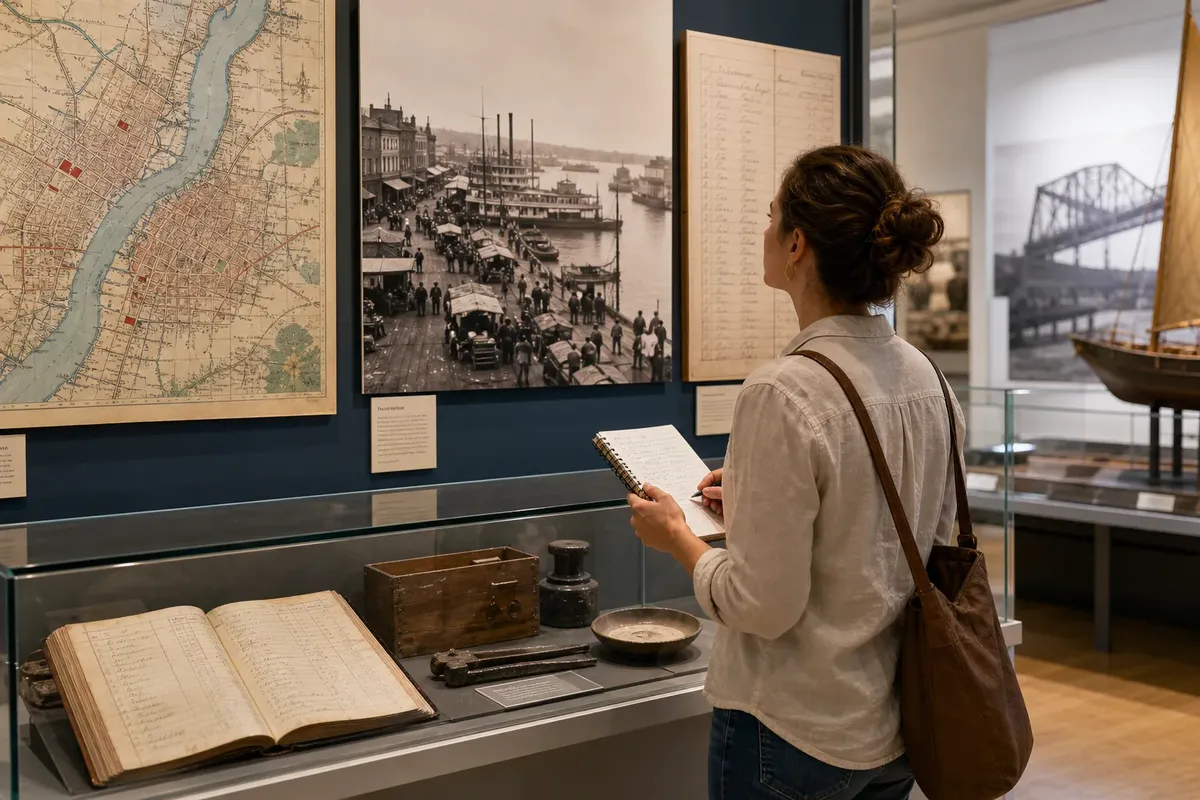
Which museum exhibits can help explain why a city grew beside a river? A museum visit built around one question can connect galleries that might otherwise feel like separate rooms. The question is a way to choose where to spend attention, not an assignment to finish.
For a visit about a river city, you might follow the movement of goods, the growth of neighborhoods, or the uses of the river for work and recreation. Each route leads to different galleries and different kinds of evidence. Choose one thread and let the rest remain for another day; a museum can outlast anyone’s attention span.
What makes a useful museum question?
A useful question is specific enough to guide your choices and open enough to allow an unexpected answer. “How did the river shape the city?” may be broad for one visit. “How did river trade affect the location of markets?” points toward maps, shipping records, trade goods and photographs of waterfront streets.
Questions about a change, a decision or a relationship are often easier to follow across collections. You could ask why a public building was placed where it was, how a new transport route altered a neighborhood, or which work depended on the river. Keep the wording plain enough to remember without consulting a note.
Before you go, name the kinds of exhibits that might help answer the question. For river trade, a map could show where markets stood; a ledger might record what passed through the port; a photograph could show how the waterfront was used. These are possible sources, not promises that a gallery will contain them.
How do you plan a route without turning it into homework?
Check the museum map and current gallery information, then choose a small cluster of likely stops. A city-history room and a transport gallery might both speak to river trade, even if their displays do not share a theme. Treat the map as a way to avoid needless backtracking, not as a contract to visit every room.
If the museum has a searchable collection, try a few specific terms such as “wharf,” “market” or “freight.” Note a possible gallery or object, then leave room for a useful detour. A room title can be less informative than a photograph or map tucked into another exhibition.
For a shorter visit, choose one main display and one that offers a different perspective. A trade map might show planned routes; a photograph of a market street might show how commercial activity met the surrounding neighborhood. For a longer visit, add a source that complicates your initial idea, such as a display about a rail line that shifted business away from the waterfront.
It is not worth spending the whole visit searching for a perfect exhibit or building a minute-by-minute itinerary. Check access information and any gallery restrictions that affect your plans, then keep the route flexible. A closed room is an inconvenience, not a plot twist.
How can you connect exhibits without making them say the same thing?
Give each stop a different job. A map can help locate activity, a photograph can show how a place looked, and a business record can reveal what was traded. Together, they may sharpen a question without producing a complete account.
Keep your notes focused on the subject of the visit rather than on a general comparison of display labels and objects. For example, record that a market moved closer to a rail station, or that a river landing appears in a later street plan. These details help you trace change across places and periods.
Distinguish what a source directly shows from what you infer. A photograph may show stalls beside a street, but it cannot establish how much business they did. A map may place a market near the river, but it does not reveal who could afford to shop there. That boundary keeps a plausible connection from turning into an unsupported story.
At each stop, write down one specific detail and its relevance to the question. “Market shown beside the wharf on the city map” is easier to use later than “interesting exhibit.” If note-taking interrupts the visit, jot a phrase afterward or use a voice memo outside the gallery. Take photographs only where museum rules allow them.
When should you change the question?
Change the wording when several relevant exhibits point toward a more precise subject, or when they challenge an assumption in the original question. A question should guide the visit, not keep it trapped in its first idea.
Say you arrive asking, “Why did shops cluster by the river?” Your starting notes are a city map showing several market streets near a landing and a photograph of a nearby rail station. At the first stop, you record the map’s location of the markets; at the second, you note that the station appears to offer another route for moving goods. You then look for a business record or later map that might clarify whether trade shifted, and find that the displays do not establish the full change. The useful result is a narrower question—“How did river and rail access shape market locations?”—and a clear limit: the exhibits suggest a connection, but do not settle its extent.
That is enough of a result for one visit. You have a revised question, a route for further looking and a distinction between what the exhibits show and what they leave unresolved. If one display turns out to be unrelated, leave it out rather than widening the question until it covers the whole museum.
What do visitors often ask about a museum visit built around one question?
How many exhibits should I choose?
Choose one main display and a small number of possible supporting stops, with room to change course. If the exhibits are dense, spend longer with fewer; if they are brief, follow the thread into another gallery.
Should I read every label?
No. Read labels that identify a source, explain its setting or help answer the question. If a label does none of those things, move on and keep your attention for a more relevant stop.
What if the museum has no direct answer?
Look for a partial clue or a complication, then decide whether the question needs narrowing. If the displays do not connect to it, set the question aside rather than forcing a link.
Can children follow the same approach?
Yes, with a question tied to something they can spot, such as “Where do you see signs that people used the river to move goods?” If the exhibits do not show those signs, invite them to choose a related question, such as what the river was used for in another period.
What should you record before leaving?
Write down the question you arrived with, one exhibit that changed or sharpened it, and the question you are leaving with. Add the gallery or source name when you can; a precise note is easier to use later than “the old river display.”
For the worked visit above, a useful record might read: “Arrived asking why shops clustered by the river. The map places markets near the landing; the station photograph suggests another transport link. Leaving with a question about how river and rail access shaped market locations. The exhibits do not establish how much trade moved.” Each sentence records a source, a connection or a limit.
If you want to continue the subject later, note a collection term such as “wharf” or “market street” alongside the gallery name. It can help you find related material without turning your visit notes into a transcript. Recording every date and photographing every display is not worth the effort; select details that bear on the question, and follow the museum’s photography rules.
A museum visit built around one question can end with a better question rather than a complete answer. Keep that revised wording with the names of the exhibits that prompted it, so a future visit or library search can begin at the point where this one stopped.
Nearby questions

Why Honeycomb Cells Settle into Hexagons
Why honeycomb cells settle into hexagons involves geometry and bee construction. Learn what shared walls explain—and…
Borrowed Words: Keep the Spelling, Adapt the Sound
Borrowed words need not force a choice between sound and spelling. Keep a recognizable written form,…