What Makes a Leaf Turn Red in Autumn
What makes a leaf turn red in autumn? See how chlorophyll fades, why some trees make red pigment and what leaf colour can—and cannot—tell you.
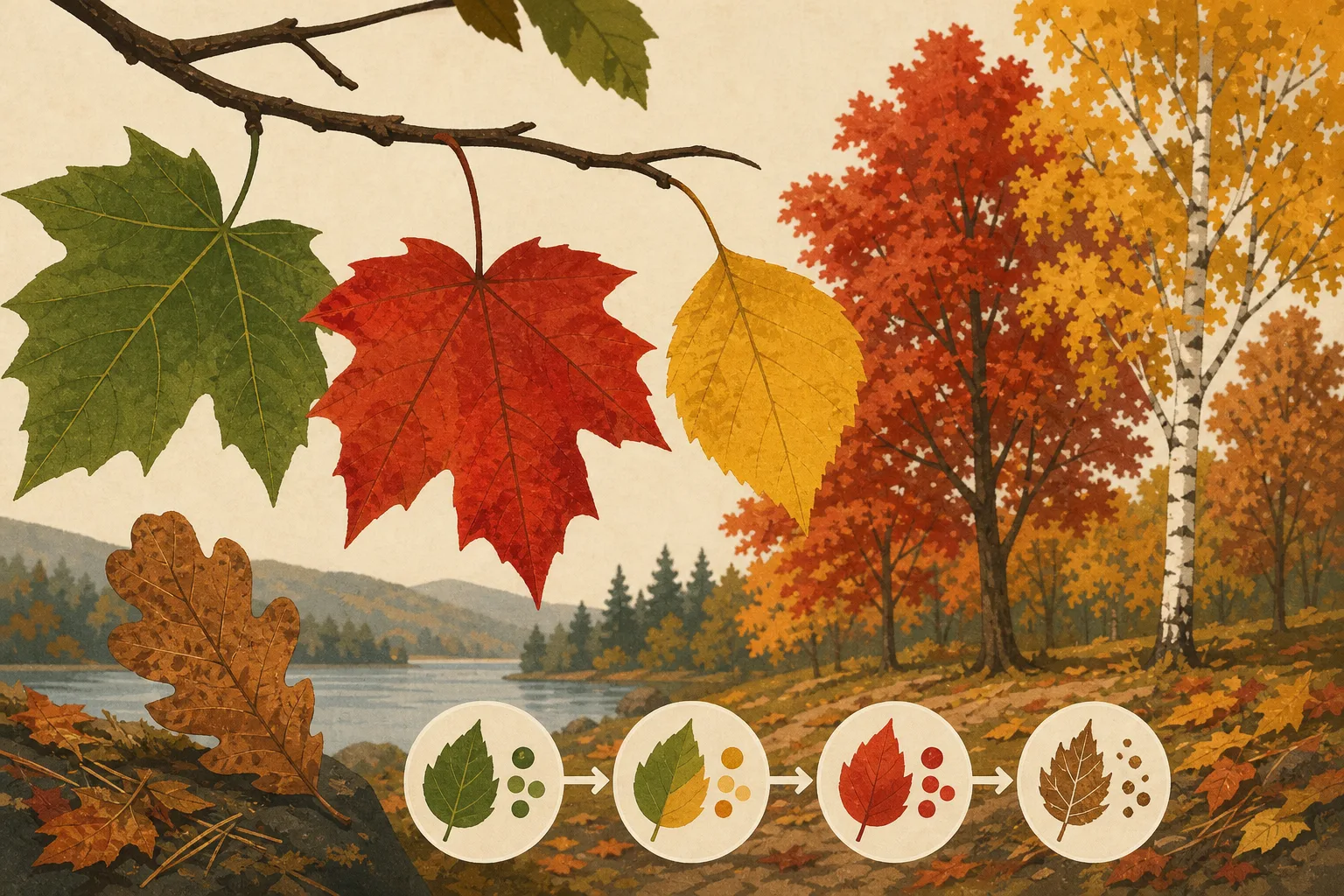
The common mistake is to blame the first cold night for red autumn leaves. What makes a leaf turn red in autumn is a seasonal change in leaf pigments: chlorophyll declines, and some leaves form red anthocyanins. That difference helps explain why one tree turns scarlet, another yellow and a nearby one brown.
Shorter days begin the seasonal change
A leaf is working tissue, not a coloured ornament. During the growing season, it captures light and helps the tree make sugars. Chlorophyll gives it much of its green appearance and is part of the machinery that uses light.
As days shorten, many deciduous trees prepare to shed their leaves. Daylight is an important seasonal cue, while temperature and water conditions can also affect the timing and course of the transition. The tree gradually changes how useful materials move from the leaf into other parts of the plant.
This is not a switch flipped by one chilly morning. The change unfolds over time, and weather can alter its pace. The tree is managing a seasonal transition, not arranging a display for walkers, though the display is a useful side effect.
Fading chlorophyll reveals yellow and orange
Chlorophyll is continually made and broken down while a leaf is active. As autumn progresses, its production slows and existing chlorophyll degrades. Green becomes less dominant.
Carotenoids give many leaves yellow and orange tones. They are present in green leaves too, but chlorophyll often masks their colour. As the green fades, carotenoids become more visible. A leaf can therefore look yellow without making a fresh supply of yellow pigment in autumn.
The change is more like a reveal than a sudden repaint. Which colours appear depends on the pigments already present and on how the leaf changes as the season advances.
Some leaves form red anthocyanins
Red and purple autumn shades often involve anthocyanins. Unlike carotenoids, these pigments are not simply uncovered when green fades. In some species, anthocyanins form in leaves during autumn. Their presence and amount vary among species and with conditions.
Light, temperature and sugars remaining in a leaf can influence red colour, but they do not make a universal recipe. Bright conditions and cool weather may favour vivid colour in some circumstances; the same combination will not make every tree turn scarlet.
Anthocyanins absorb light and can also act as antioxidants in plant tissues. One proposed explanation is that, in some leaves, they help limit stress while the tree reclaims useful materials before leaf fall. Their role is not settled for every species or circumstance, and red colour alone cannot show how much protection a particular leaf receives.
Species and local conditions shape different palettes
Tree species differ in their pigments and in how their leaves change before falling. Maples are often associated with red shades, while many birches and aspens turn yellow. Oaks may show russet or brown tones, reflecting a mix of pigments and changes in leaf tissue.
Leaves on the same tree can differ too. Sunlit leaves and those shaded inside the canopy experience different conditions. Moisture, soil and the sequence of autumn weather can also affect the display, but they do not act like a reliable paint chart.
Say you are walking beside a sugar maple and a birch. Imagine the starting point is one sugar maple with several green leaves and one nearby birch with several green leaves; these are invented starting quantities, not observations from a real tree. As the season advances, suppose the maple’s leaves form anthocyanins while the birch’s leaves reveal carotenoids as chlorophyll declines. The expected visible result is red on the maple and yellow on the birch. You could then decide that species and pigment changes offer a better explanation than one cold night; the colours would not establish the trees’ health or prove a protective effect.
Brown leaves reflect drying and tissue change
Brown can become prominent as a leaf dries and its tissues break down. Weather damage and the way a species retains its leaves can also contribute. Brown is not a single final pigment into which every other colour has been converted; autumn chemistry is less tidy than a paint set.
Harsh weather or dry conditions can interrupt gradual colour development. If pigment changes have time to unfold before leaf fall, the display may be brighter, though outcomes vary among trees and from year to year.
A fallen leaf may have a yellow centre, red patches and brown edges. Those differences can reflect local variation in light, tissue condition and pigment activity. The colours record overlapping processes rather than simply announcing that autumn has arrived.
What do common autumn leaf colours tell you?
Are red pigments hidden in leaves all summer?
Usually, anthocyanins responsible for red autumn colour form as the season changes rather than lying hidden beneath chlorophyll all summer. Carotenoids, by contrast, are commonly present in green leaves and become easier to see as chlorophyll fades.
Does frost make leaves turn red?
Frost is not a universal trigger for red leaves. Seasonal changes in daylight help set the process in motion, while temperature and other conditions influence how it unfolds; severe weather can damage leaves and shorten the display.
Why do some trees turn yellow instead of red?
Species differ in their pigments, and not all produce autumn anthocyanins. Where carotenoids are prominent and little red pigment forms, leaves are more likely to look yellow or orange.
Why are autumn colours brighter in some years?
Colour depends on species, light, temperature, moisture and the timing of leaf fall. Conditions that suit vivid colour in one tree may produce a different result in another.
Read colour as a clue, not a diagnosis
Autumn colour alone cannot tell you exactly how healthy a tree is or what the weather will do next. Red points to anthocyanin activity; yellow often reveals carotenoids as chlorophyll declines; brown may reflect drying, tissue breakdown or damage. These are clues, not a diagnosis.
For a closer comparison, look at sunlit and shaded leaves on the same tree, then compare them with a nearby species. What makes a leaf turn red in autumn is the meeting of seasonal change and a tree’s particular chemistry: chlorophyll recedes, existing pigments become visible, and some leaves form anthocyanins. Colour offers a glimpse of that process, not a simple verdict on the tree.